Home / Services / Automotive / Undercarriage
Automotive · Miami, FL
Undercarriage Ice Blasting
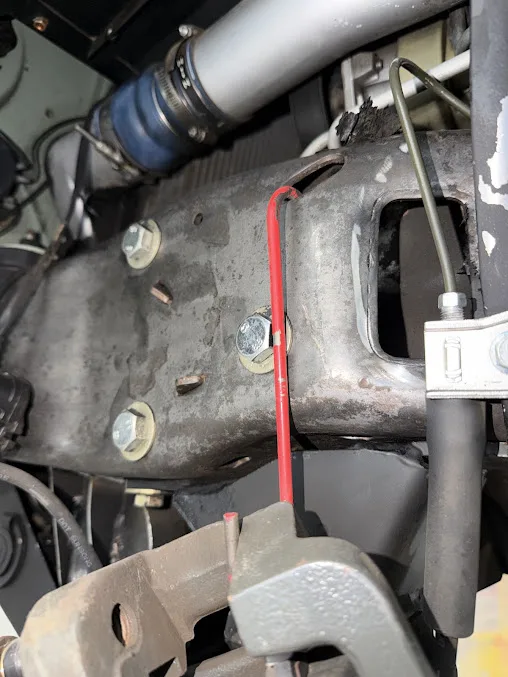
When people call about undercarriage, the constraint is usually the same. We clean it without water, without chemicals and without anything abrasive touching the surface.
What builds up, and why it matters
On this kind of work the problem is baked grease, road film, undercoating, sound deadening, adhesive and brake dust. Media blasting will cut into aluminum and pit a frame. Pressure washing drives water into looms and bearings. Solvent strips the finishes you wanted to keep. Dry ice takes the contamination and leaves the part.
Engine bays, frames and undercarriages are cleaned on a lift, on stands or in your driveway. The people who call us about undercarriage are usually restorers, shops and owners who actually care about the vehicle, and the thing they are actually worried about is damage to a car that took years to put together.
The method
Why dry ice and not the alternatives
- Non-abrasive
Sand and soda wear the surface down along with the dirt. Dry ice uses cold to break the bond, so the metal under it stays as it was.
- Low moisture
There is no hose of water and no wet floor. The area around the job stays dry while we work.
- No secondary waste
No secondary waste stream. Nothing is left from the blasting itself, and the contaminant that comes off gets contained and cleaned up by us.
- Often no teardown
The machine stays where it is and mostly in one piece. Reassembly, where most of the labor normally goes, largely drops out of the job.
More automotive work
Related jobs we get called for
Questions we get asked first
Will it damage the surface underneath?
Rarely, and we take the risk out up front. Pressure and pellet size are set on a spot nobody will look at, so if a surface reacts badly we find out there and stop.
Do you have to take the equipment apart for undercarriage?
In a lot of cases, no. The pellets get into corners and recesses that a brush or scraper cannot reach, so most of the cleaning happens with everything still bolted together.
How much mess does it make?
Some, because the grime has to go somewhere. It falls where we have planned for it to fall, and picking it up is part of what you are paying for.
Do you come to us?
Yes, that is how we work. Nothing needs to be loaded or shipped. We bring the full setup to you anywhere in South Florida, from Miami out to around a hundred miles.
What does a job cost?
There is no flat rate, because no two jobs carry the same buildup or the same access. Tell us what it is and where it sits, and send a photo. We will come back with a real price, never a teaser to get us through the door.
How soon can you look at it?
As soon as we have seen what the job is. Send a description and a photo, an owner reads it and comes back with a date, and because the rig travels to you there is nothing of yours to ship first.
The comparison
How this compares to the usual methods
- Solvent and degreaser
Chemistry works, but you inherit ventilation, waste handling and a film on the surface.
- Hand scraping
Fine on a patch, hopeless on a machine, and the blade leaves its own evidence.
- Media blasting
It works by removing material, which is the problem. Acceptable on heavy steel, damaging on soft alloy, plating or a machined surface.
- Pressure washing
Drives water into harnesses, bearings, panels and seams, then everything waits to dry. On electrical work it is simply not an option.
- Dry ice
The pellet is soft and the mechanism is temperature, not abrasion. It turns to gas on impact, so the only thing left to sweep up is what came off.
What comes off
The deposits we see most
Most jobs start with one of these. The details differ, but the job is always to separate a deposit from what it is stuck to.
- Adhesive and sealant
The stubborn film under old tape, or the gasket that tore and left half of itself behind.
- Resin and mold release
Texture and polish on a mold surface carry straight into the part. Dry ice clears the residue and leaves that finish alone.
- Paint and coatings
Taken off in a controlled way when what is underneath matters more than speed.
- Salt and corrosion product
Salt deposit and the oxidation it starts. Anything abrasive removes the protection along with the salt.
- Ink and printing residue
Ink and coating on anilox and press rollers, surfaces where changing the texture changes the print.
- Food residue
Carbonized product, fat, starch and sugar build-up on processing equipment, cleaned without chemicals touching a food contact surface.
- Grease and oil
The greasy base coat that traps grit and dust. It releases early and takes the loose material with it.
How a job runs
What happens once you call
The process is simple, and we would rather you know it before we show up than wonder about it while we work.
- We blast, then clean up
One mess instead of two: the pellet vanishes and we take away what it removed.
- You look before we pack up
A second pass while everything is still connected is free in every sense. A return trip is not.
- You describe the job
We start with what it is and what is on it. Whether it can come offline matters as much as the contaminant, and a wrong-tool answer is one we give up front rather than after the invoice.
- We look at access and containment
Hose run, compressor position, what needs masking, and where the contaminant is collected. For food and electrical jobs the containment plan takes longer to settle than the blasting does.
- We test a small area
Pressure and pellet size get dialed in on an inconspicuous spot before we touch anything visible. Painted parts, soft alloys and older finishes all behave differently, and the right setting on one is the wrong setting on another.
What happens in your space
The truck carries its own compressor. Nothing on your property has to be plugged in or handed over to us.
Masking happens first. Whatever is adjacent and vulnerable gets covered before the hose is picked up.
Outside on a driveway or a lot, there is not much to set up. Inside, we ask about the size of the room and how it is ventilated before we bring the hose in.
Expect it to be loud while the hose is running. If people on your site are still working nearby, we plan for that before we start.
Send us the job.
Tell us what you have and where it is. If you can snap a picture, send it. Giancarlo or Kenny will be the one who calls.